
Home Nurse vs Nursing Aide
In the field of home care, several terms are often used interchangeably, which can create confusion for both families and patients themselves.
Home Nurse: The Health Companion
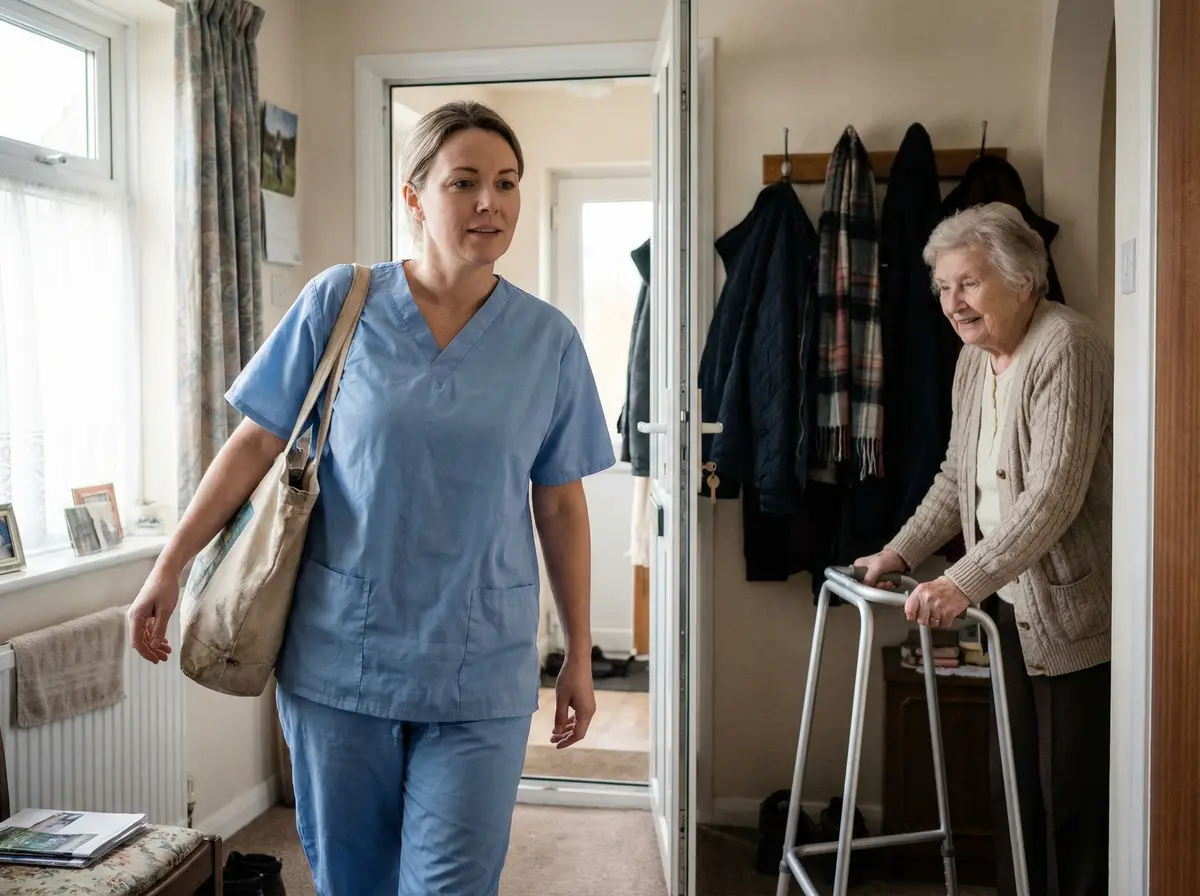
The term “home nurse” is often used to designate a person who assists sick or elderly people in their daily lives. Historically, the role of home nurse was less regulated and focused mainly on patient monitoring and comfort. It was more a reassuring presence than a qualified health professional. The home nurse can help with taking medications, preparing meals, and other household tasks, but their medical care skills are generally limited.
Nursing Aide: The Pillar of Home Care
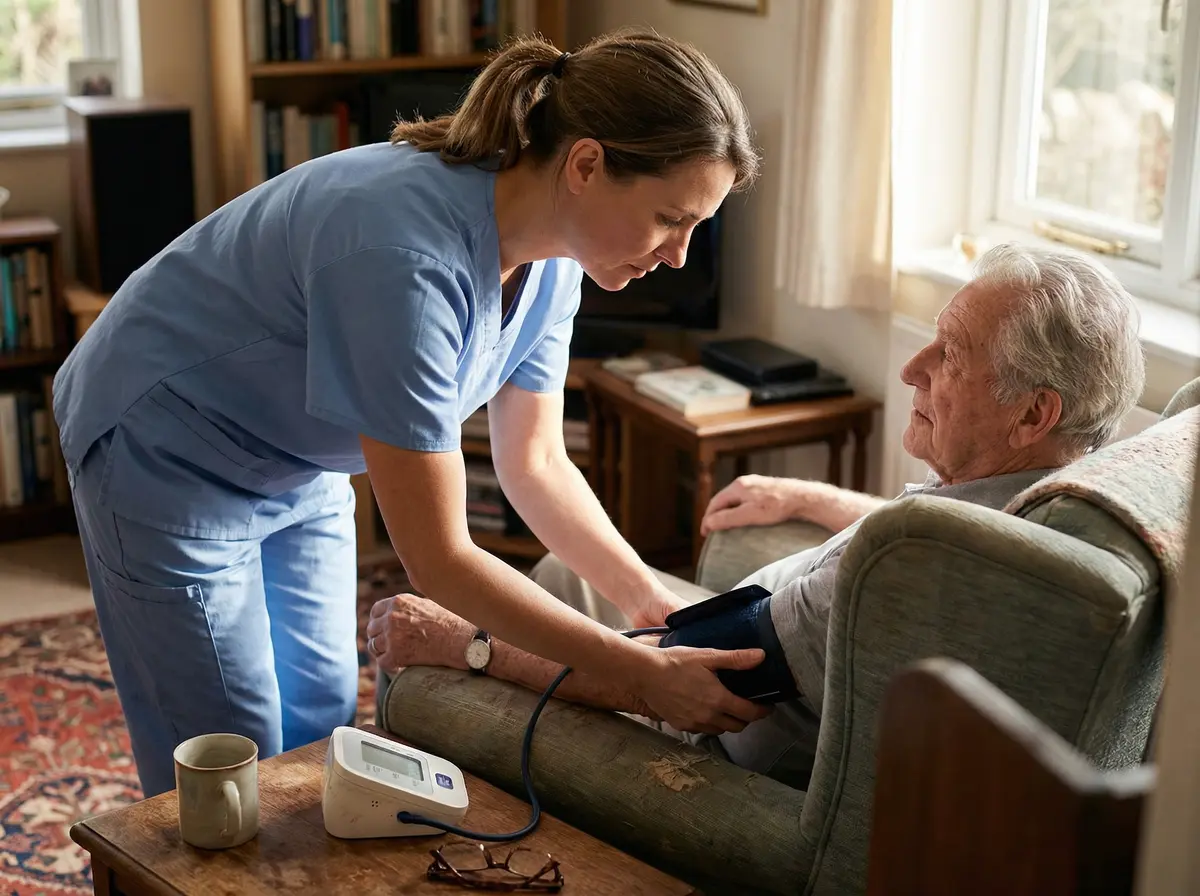
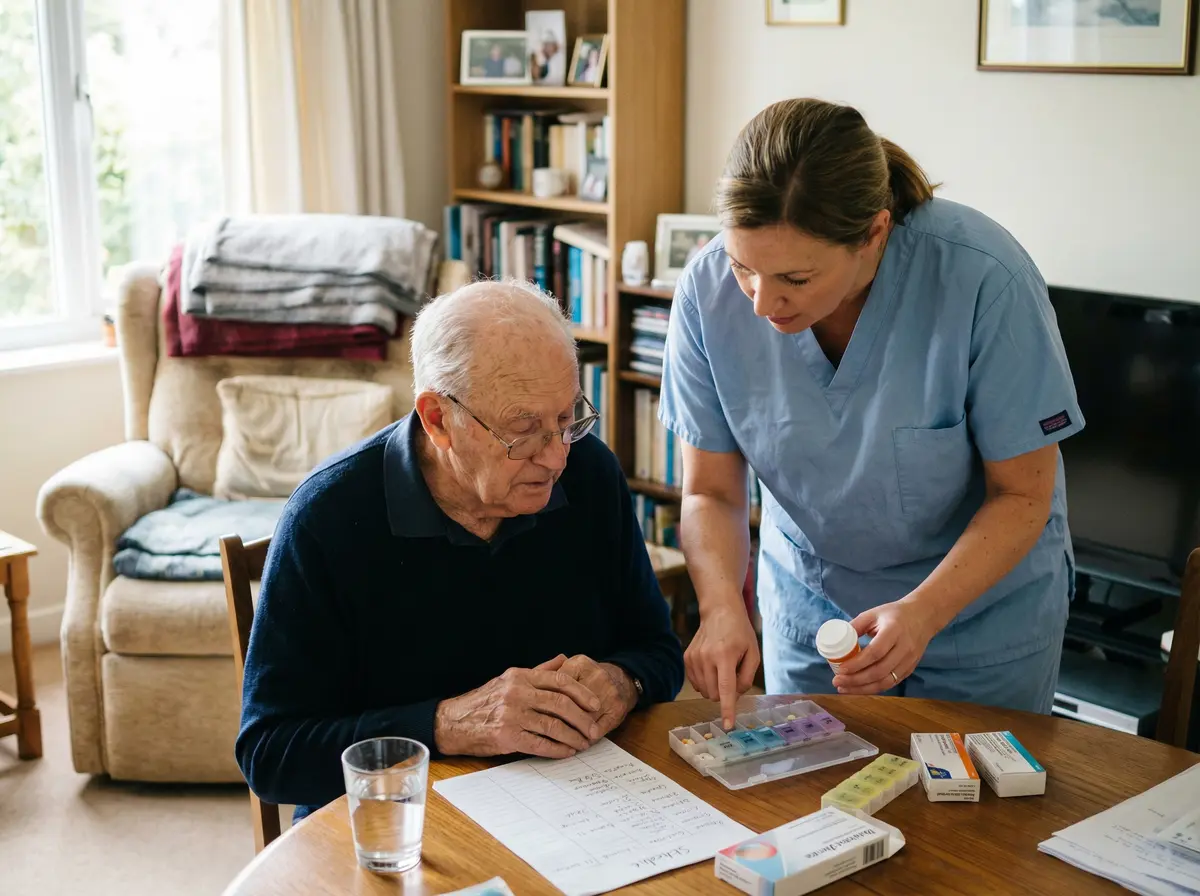
The nursing aide is often considered the pillar of home care, offering a range of services that go well beyond simple assistance. Trained and certified, they are authorized to perform basic medical tasks under the supervision of a qualified health professional. Their role is essential in managing the patient’s daily care, including monitoring vital signs, administering medications, and even more specialized care like dressings. In addition to these technical skills, the nursing aide also provides emotional support, thus helping to improve the patient’s quality of life at home.
Home Care Assistant: The French Term
In France, the term “auxiliaire de vie” is commonly used to designate professionals who assist people in situations of dependency in their daily life. Unlike the nursing aide, the home care assistant is not necessarily trained to provide medical care, but they play an essential role in maintaining the patient’s autonomy. They can help with bathing, preparing meals, shopping, and even simple administrative tasks. This term is specific to the French healthcare system and has no real equivalent in Belgium, where responsibilities often fall to the nursing aide.
Companion Lady: More Than a Presence
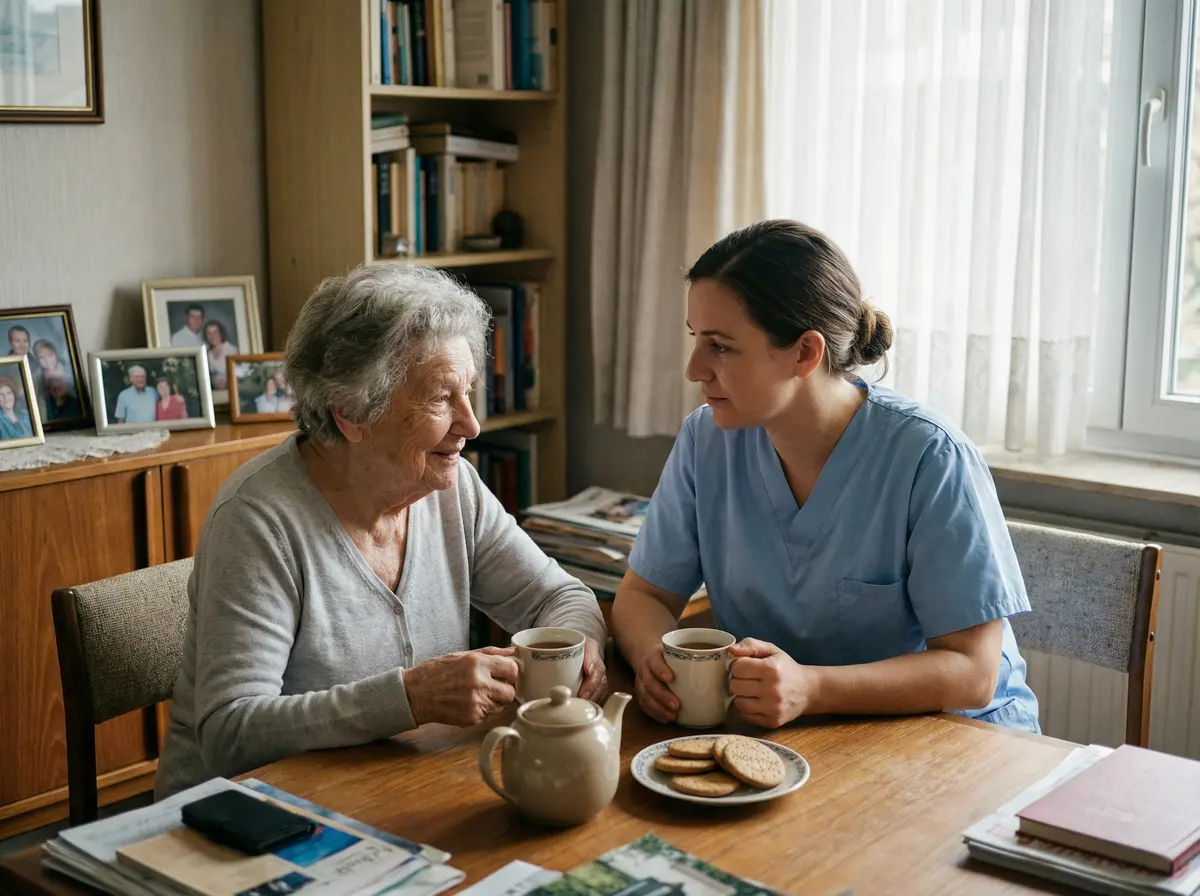
The “companion lady” is often perceived as a less medical figure, more focused on the emotional and social well-being of the person being helped. She is there to offer a reassuring presence, engage in conversations, participate in leisure activities, and in some cases, help with simple household tasks. Although the companion lady is not trained to provide medical care, her role in improving quality of life should not be underestimated. She helps break social isolation and maintain a certain level of mental activity, which can be particularly beneficial for elderly people or those suffering from cognitive disorders.
A Bit of History
The role of “companion lady” has its origins several centuries ago within the nobility, accompanying high-ranking women. This role has evolved from an exclusive aristocratic position to a more democratized profession, serving broader populations with specific needs.
Why Hire a Certified Nursing Aide from Home Nursing Care
We recommend employing exclusively nursing aides certified in Belgium, capable of assuming all responsibilities in different care categories while guaranteeing professional competence and compassion.
Contact us for a free estimate of home care services.